
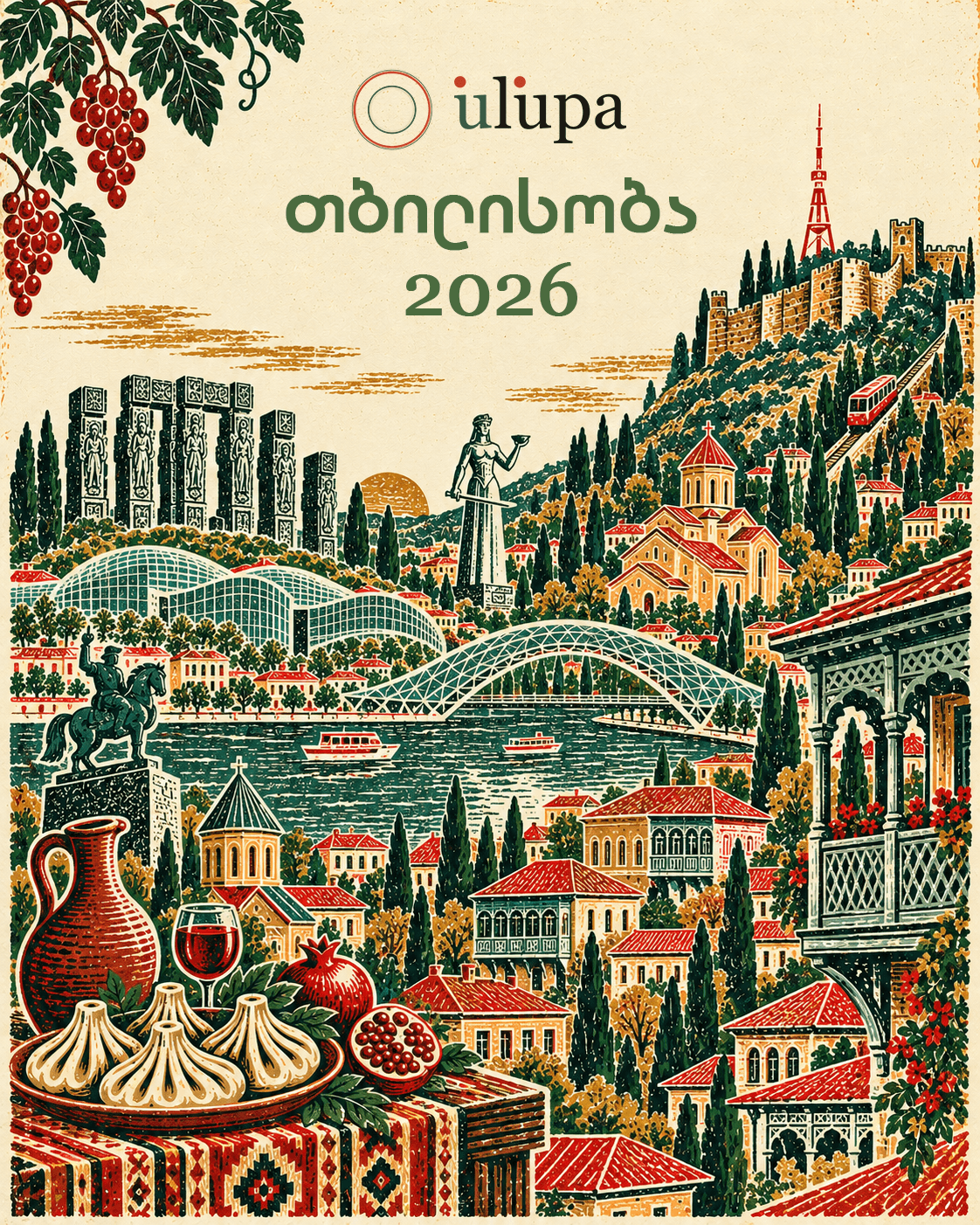
Tbilisoba: The History of the Holiday and a Festive Table
Every autumn Tbilisi celebrates its own day — Tbilisoba. The city fills with music, fairs, young wine and, of course, food: mtsvadi grilling on every corner, grapes being pressed, churchkhela handed out to passers-by. In 2026, Tbilisoba falls on October 3–4. But behind the cheerful holiday lies a big story — of warm springs, a falcon and a pheasant, and a city that grew at a crossroads of cultures. We'll tell you both that story and how to throw your own Tbilisoba at home.
What is Tbilisoba
Tbilisoba is the city's birthday, a celebration of Tbilisi, its history and its diversity. It was created and first held on October 28, 1979, and has been a cherished tradition ever since. Tbilisoba is marked in early autumn, when rtveli — the grape harvest — is in full swing, so the celebration of the city and of the harvest merge into one. Craft fairs unfold along the streets, music plays, people dance, grapes are pressed in front of the guests, and above all — there's food and wine everywhere.
The legend of Tbilisi's founding
The city has a beautiful legend of its birth. In the 5th century, King Vakhtang Gorgasali was hunting in the local forests. His falcon chased a pheasant, and both birds disappeared into the thickets. When the king found them, it turned out they had fallen into a hot spring: by one version, the pheasant was boiled in the scalding water; by another, the falcon perished. Vakhtang was struck by the warm sulfur springs bursting straight from the earth, and ordered a city built there. That's where the name comes from: "Tbilisi" derives from the Georgian word "tbili" (თბილი) — "warm." The city was named after its warm waters.
A bit of history
Legend aside, the warm springs are real: the famous sulfur baths in the old town (Abanotubani), with their domes, still stand there, and you can still take a soak in them. Soon after its founding, Tbilisi became the capital of Georgia — moved here from ancient Mtskheta. Standing at a crossroads between Europe and Asia, the city gathered different peoples, languages and faiths under its roofs for centuries. It's exactly this diversity that Tbilisoba celebrates: a city where every neighborhood has its own character, and every table its own guests.
How Tbilisoba is celebrated
During these days the whole old town turns into one big fair. Artisans sell ceramics and handmade goods, orchestras and folk ensembles play, people dance, and winemakers press grapes and pour young wine straight from the qvevri. But the heart of the holiday is, of course, the food: smoke from the grills, fresh tonis puri, cheese, honey, rtveli sweets. Tbilisoba is about generosity and hospitality, about a big table everyone is invited to.
The flavors of Tbilisoba
A festive Tbilisoba table is the classic Georgian spread:
- Mtsvadi — barbecue grilled on grapevine, the main flavor of the autumn holiday.
- Khinkali and khachapuri — without them, a supra isn't a supra.
- Lobio, pkhali, salads — hearty and homey.
- Tonis puri and cheese — a simple but essential base of the table.
- Rtveli sweets — churchkhela and pelamushi for dessert.
- Young wine — the symbol of the season (optional).
Tbilisoba at home — without cooking all day
Setting such a table yourself means half a day at the stove and a mountain of dishes. There's an easier way: order the festive dishes from home cooks. While you take care of guests and the mood, a cook makes a real supra — khinkali, khachapuri, mtsvadi, sweets. Open the Catalog, pick dishes from a cook near you and arrange delivery or pickup for the time you need.
What to order for the festive table
If you're not sure where to start, here are ready-made sets:
- A small group (2–4 people): khinkali + khachapuri + salad with pomegranate + churchkhela.
- A big supra (5–8): mtsvadi + khinkali + khachapuri + lobio + pkhali + pelamushi.
- A sweet table: churchkhela, pelamushi, badagi — with tea and wine.
Add young wine — and Tbilisoba is right there at home.
Order ahead in time
Holidays are a busy time: cooks have many orders, and they prepare for a specific date. So for Tbilisoba it's best to order ahead — a day or two in advance, not at the last minute. That way the cook is sure to have time, and you get a fresh festive table right when you need it.
FAQ
When is Tbilisoba in 2026? October 3–4 (the city hall confirms exact dates closer to the holiday).
Why is the city called Tbilisi? From the word "tbili" — "warm": by legend, King Vakhtang Gorgasali founded the city by hot sulfur springs.
When did the Tbilisoba holiday begin? It was first held on October 28, 1979; it's been celebrated every autumn since.
What do people eat at Tbilisoba? Mtsvadi, khinkali, khachapuri, lobio, cheese and tonis puri, rtveli sweets, young wine.
Can I order a festive table with delivery? Yes — from home cooks in the Ulupa catalog, better in advance.
Throw your own Tbilisoba at home
Tbilisoba is about joy, the city and a generous table. Open the Ulupa Catalog, put together a festive supra and order it with delivery across Tbilisi. Happy Tbilisoba! 🎉